
7 Carry-On Luggage Features That Actually Matter (Buying Guide)
September 23, 2026
Carry-on luggage features are the specifications that determine whether a bag survives years of travel or falls apart after a single rough connection. Most shoppers compare color and price first and check the actual construction last, which is backwards, a luggage's zipper type, wheel mounting, and shell material affect it far more than its color ever will.
This matters because carry-ons take more physical abuse than almost any other travel item: dragged through security, jammed into overhead bins, and dropped onto curbs, often multiple times a week for frequent flyers.
The features that separate a durable carry-on from a disposable one include reinforced zippers, screw-mounted wheels, an empty weight under 7 lbs, TSA-approved locks, and a shell material suited to how roughly it gets handled. The list below breaks down each of these seven features in detail.
- Zippers: Chain zippers use interlocking teeth and resist prying far better than coil zippers. This is the single fastest way to judge how a bag was actually built.
- Wheels and mounting: Four-wheel spinners maneuver more easily than two-wheel rollers, but how the wheels are attached matters just as much. Screw-mounted wheels hold up to rough handling better than riveted ones.
- Empty weight: A wheeled carry-on at 7 lbs or under is considered genuinely lightweight. Every pound above that is a pound you can't use for actual belongings.
- Locks: TSA-approved combination locks let security agents inspect a bag without cutting the lock off. This protects both the contents and the lock hardware itself.
- Handle system: A telescopic handle gets extended and retracted more times than any other part of the bag across a trip. Smooth, wobble-free movement is usually the first sign of solid construction.
- Shell material: Hard-shell luggage protects better and locks more securely, while soft-sided luggage flexes into tighter spaces and weighs less. Neither is universally better, it depends on how the bag will actually be handled.
- Interior capacity and layout: Two bags with identical outer dimensions can pack very differently based on interior geometry. Squared edges and compression panels add real usable space that curved corners give up.
Want to See These Features on a Real Bag?
Compare zippers, locks, and shell materials across a full range of carry-ons.
1. Zippers: The Feature Most Buyers Skip Checking
Zippers are the single most reliable indicator of a suitcase's overall durability. Chain zippers use interlocking metal or molded-plastic teeth, making them sturdier and harder to force open under pressure. Coil zippers slide on two polyester coils instead, lighter and more flexible, but easier to pry apart and reclose without visible damage.
What to check: Run your fingers along the zipper track, chain zippers feel noticeably thicker and more rigid than coil zippers, which feel thin and springy by comparison. Pull the zipper itself; it should move with even resistance the entire length of the track, not catch, skip teeth, or require force at any point. A quality zipper also has a slightly oversized, easy-to-grip pull tab, since undersized pulls tend to be the first part of a cheap zipper to break off.

2. Wheels and Wheel Mounting
Four-wheel spinners rotate 360° on each wheel, letting a bag roll beside you, ahead of you, or spin in place through a tight security line. Two-wheel rollers only move forward and back, which means dragging at an angle, harder on the shoulder, though the wheels sit recessed and better protected from impact.
What to check: Spin each wheel individually with your finger, it should rotate freely and silently, with no grinding, wobble, or resistance. Then grip the wheel itself and gently try to rock it side to side; excessive play means loose mounting hardware that will likely fail under real use. Look closely at how the wheel is attached to the housing: a visible screw head means it can be tightened or replaced if it works loose, while a smooth rivet means the wheel can't be serviced if it fails.
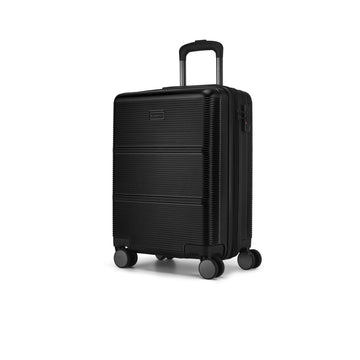
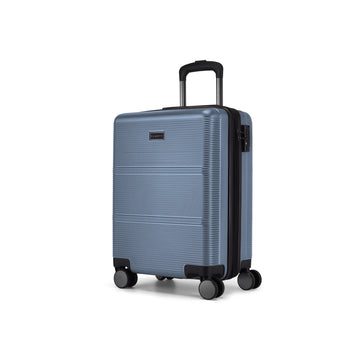
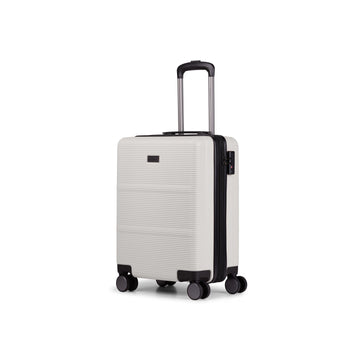
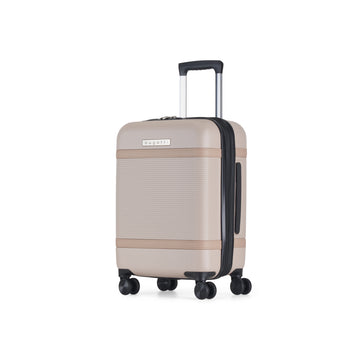
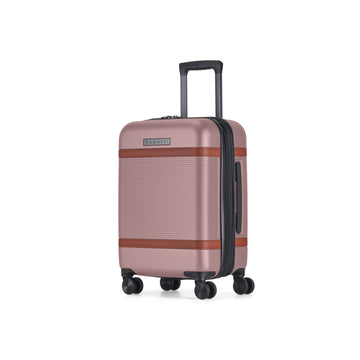
The Bugatti Munich Carry-On is a useful reference point: it uses Double 360-degree spinner wheels for smooth, precise control and is built from lightweight recycled PET.

3. Empty Weight
This is the bag's own weight before anything goes inside it, and it's a spec that gets overlooked constantly. Empty bag weight matters most because a carry-on that weighs 10 lbs empty leaves only 40 lbs of actual belongings before hitting a typical 50-lb limit, meaning a heavy shell can eat a fifth of your total allowance before you've packed anything.
What to check: Weight alone doesn't tell the full story, a bag can be light because it's well-engineered, or light because it's thin and under-built. Press firmly on the shell's flattest surface; a quality lightweight bag resists denting or flexing noticeably under moderate pressure, while a poorly built one will visibly bow inward.
Compare the weight against the shell thickness and wheel/handle hardware quality together, since a bag that's light purely from a thin shell will usually show weaker wheels and zippers to match. The Bugatti Lisbon Carry-On is built around this balance, using lightweight, resilient ABS to keep weight down without giving up protection.
4. Locks
TSA-approved combination locks allow security agents to open and re-lock a bag using a universal master key during inspection, rather than cutting the lock off entirely. This is a non-negotiable feature for any carry-on that might be gate-checked or left unattended during a connection.
What to check: Confirm the lock is actually integrated into the shell itself, not a separate clip-on unit attached after manufacturing, integrated locks are harder to pry off and don't have exposed screws an opportunist could remove.
Test the combination dial or mechanism for smoothness, even clicks as you turn it; a stiff or inconsistent mechanism often fails first in the field. The Bugatti Brussels Carry-On is a good example. It has a built-in TSA lock, 8 spinner wheels, and a telescopic handle that locks in two separate positions.

5. Handle System
A telescopic handle should extend and retract in stages, locking firmly at each height with no wiggle or rattle. This is the single part of a carry-on that does the most repeated physical work, extended and retracted dozens of times across a single trip, so handle quality is often the first thing to fail on a poorly built bag.
What to check: Extend the handle fully and gently push and pull the top horizontally, there should be minimal side-to-side play, not a noticeable wobble. Listen for smooth mechanical clicks as it locks into each height setting rather than a loose or mushy stop. Retract it fully and confirm it sits flush or nearly flush with the shell, since a handle that still protrudes when retracted is more exposed to impact damage.

6. Shell Material: Hard-Shell vs. Soft-Sided
Hard-shell luggage protects contents better and locks more securely, but shows scuffs more visibly over time. Soft-sided luggage flexes to fit tighter overhead spaces and is usually lighter, but offers less impact protection and is more vulnerable to tearing.
What to check: For hard-shell bags, press on the shell the same way you did in the empty-weight test above. Polycarbonate should flex slightly and spring back, while ABS tends to feel lighter and more rigid. Knowing which material you're buying helps you set realistic expectations for how it will handle hard knocks.
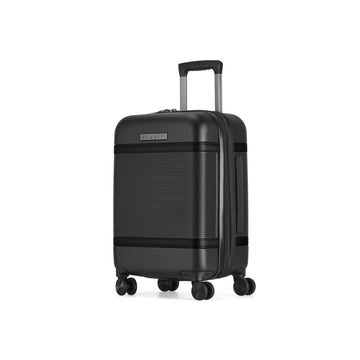
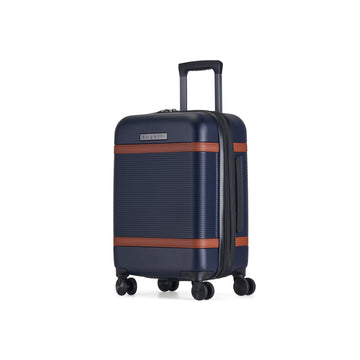
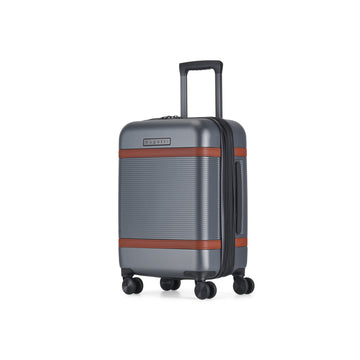
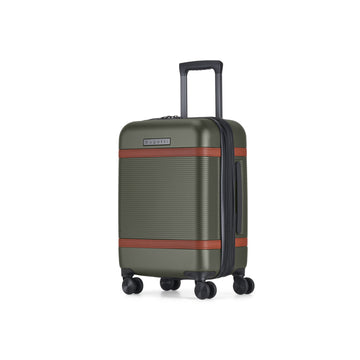
The Wellington Check-In Medium, for example, is made from a blend of polycarbonate and ABS, making it lightweight and durable. For soft-sided bags, check the fabric denier and pinch the seams. Reinforced, double-stitched seams at stress points like handle attachments and corners last much longer than single-stitched ones. If you prefer the flexibility of a soft-sided wheeled bag, compare the trade-off directly against the Bugatti Outland Carry-On.

7. Interior Capacity and Layout
When it comes to the best carry-on luggage that holds the most, it's not really about the outside size, most carry-ons have to fit the same airline size limits anyway, no matter the brand. The real differentiator is interior liter capacity, which comes down to specific design choices: squared interior edges, a 50/50 clamshell split with a compression panel, and zip-expansion that adds a few liters for the trip home.
What to check: Open the bag fully and look at the interior corners, square, boxy corners hold more than rounded ones of the same outer size. Check whether a compression strap or panel is included, since this lets you pack both sides fully and flatten the load rather than fighting to zip a bulging case shut. If the bag has an expansion zipper, test whether it still fits your intended overhead bin or airline sizer once expanded, since some bags exceed carry-on limits the moment that zipper opens.
This is also the honest story behind searches for the top 10 largest carry-on luggage, within a given size class, the bags described as "largest" are almost always the ones with the most efficient interior geometry, not a different size category entirely.




What Are Carry-On Luggage Features, Exactly?
Carry-on luggage features are the individual design and construction specifications, zipper type, wheel mounting, shell material, lock system, handle mechanism, and interior layout, that determine how a bag performs and how long it lasts. According to Consumer Reports, more than 60% of travelers surveyed cared most about a bag's "wheelability" specifically, whether it had four wheels instead of two and could rotate 360°, which underscores how much a single hardware choice affects everyday usability.
What Carry-On Luggage Features Matter Most for International Travel?
Carry-on luggage features international travelers should prioritize differ slightly from domestic trips, mainly because international size limits are often smaller and enforced more strictly at the gate. The features that matter most here are a confirmed, measured size rather than a "cabin approved" label, a built-in lock for the extra hotel storage and connection time international trips involve, and a durable hardside shell to handle rougher international baggage systems. For best carry-on luggage for international travel, these three features consistently outweigh aesthetic considerations.
What's the Best Carry-On Bag for a Woman?
No single feature makes a bag better suited to any one traveler. It depends more on height, grip strength, and packing style than anything else. That said, searches for the best carry-on bag for a woman usually point to three features: a lower empty weight for easier solo lifting into overhead bins, an adjustable handle height that avoids hunching, and strong interior organization over sheer size. Pairing a compact carry-on with a lighter personal item, like the Bugatti Wellington Backpack, makes it easy to split weight across two bags instead of overloading one. Its trolley sleeve also slides over the carry-on handle.
How Do Carry-On Luggage Features Compare to Checked Baggage?
Carry-on luggage features checked baggage doesn't need to share come down to different handling conditions entirely. Carry-ons prioritize weight and size compliance since travelers manage them personally through security and the cabin, while checked bags prioritize structural durability and locking security since they're handled by baggage systems, often for hours, out of sight.
What Makes Carry-On Luggage Ultra Lightweight?
Ultra lightweight carry-on luggage is defined almost entirely by empty bag weight rather than what it can hold. A genuinely lightweight hardside bag sits at or under 7 lbs empty; soft-sided bags often go lighter still, since they skip rigid shell weight entirely. The consistent trade-off across ultra-light options is a thinner shell, lighter-gauge zippers, or lighter-duty wheel hardware, so weight should always be checked alongside the other six features on this list, not in isolation.
Found the Features That Matter to You?
Compare carry-on weight, shell material, and hardware across Bugatti's full lineup.


